10.8% of jobs in Mexico move to all-terrain logistics
A significant proportion of Mexico’s workforce works far from urban infrastructure.
According to the National Occupation and Employment Survey (ENOE), the primary sector employed 6.53 million people between September 2024 and September 2025, equivalent to 10.8% of national employment; work dynamics are determined by geographic conditions, limited access, and logistics that differ from those of urban industrial environments.
This reflects a productive operation carried out in territories where connectivity, transportation, and infrastructure do not follow traditional standards. Access to plots of land, ranches, or supervised areas is not a secondary consideration but a critical factor for sustaining economic activity.
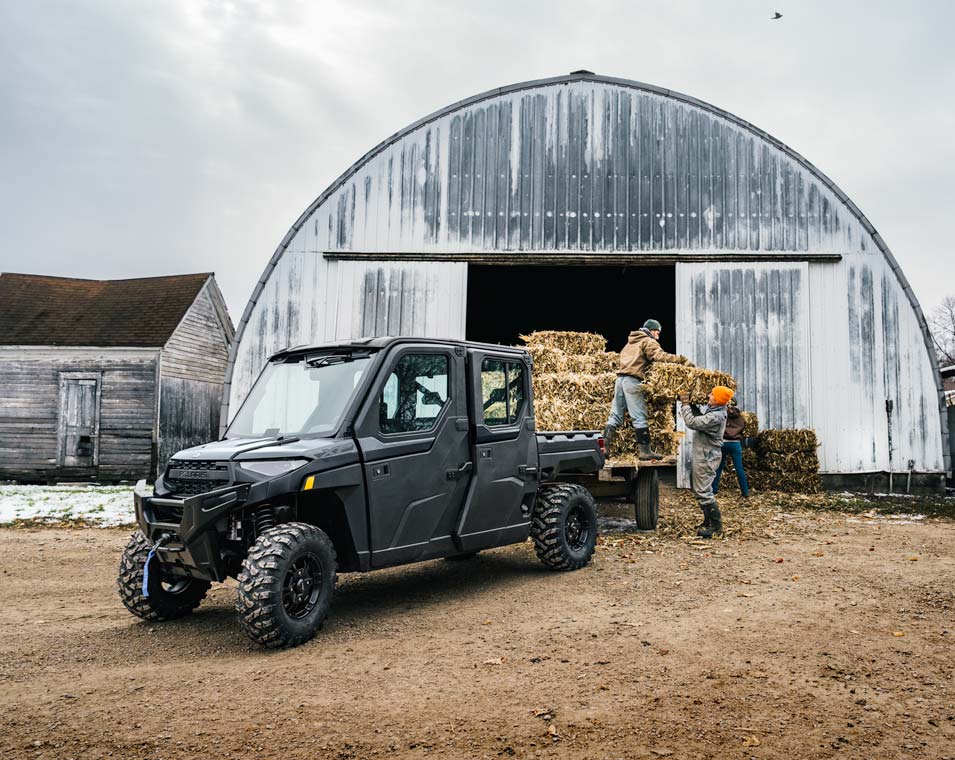
Within this context, all-terrain utility vehicles have become an integral part of the production system: vehicles such as the Polaris Ranger have been adopted for rural activities due to their ability to operate in adverse conditions, featuring all-wheel drive, a robust structure, and adaptability to various types of terrain.
The impact of these types of solutions is evident in the optimization of processes in agricultural and livestock regions such as Jalisco, Sinaloa, Coahuila, and Guanajuato, where geographic dispersion demands logistical efficiency.