Demand for Hybrids Boosts U.S. Auto Market
A sharp increase in demand for hybrid cars, driven by high gas prices, led the U.S. market to post a solid increase in light-duty vehicle sales, despite the limited number of affordable options
Preliminary data from GlobalData indicates that sales volume reached 1.4 million units, representing a 7.9% increase compared to June of last year. Cox Automotive puts the figure at 1.34 million, for a 4.2% increase, according to its records.
However, both firms agree that total sales volume in the first half of the year was lower than in the same period of 2025. This decline is -2.9% according to GlobalData’s calculation and -3% according to Cox Automotive’s estimate.
In terms of brand performance, the availability of hybrid options appears to have made a difference among consumers looking to replace their cars with more fuel-efficient models.
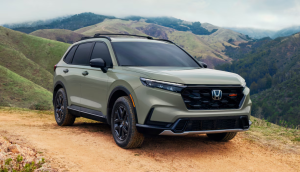
Honda, for example, recorded a 16.9% increase in its June sales, driven largely by strong demand for the CR-V SUV, which during the first half of the year displaced the Toyota RAV4 as the best-selling compact SUV in the United States with a record 226,000 deliveries, of which 55% (124,000) were hybrid models.
The Japanese brand has accumulated sales of nearly 757,000 vehicles in the first half of the year, representing a 2.4% increase compared to the same period in 2025.
Hyundai reported its best-ever June results with more than 77,000 units sold, a figure that exceeds the volume for the same month in 2025 by 11%.
The South Korean brand recorded a 74% surge in sales of hybrid models, particularly the Santa Fe (+12%), Sonata (+246%), and Tucson (+14%).
Cumulative deliveries for the first half of the year exceeded 450,000 vehicles, representing a 3% increase and marking Hyundai’s best result for the first six months of the year to date.
Its subsidiary, Kia, performed similarly, also reporting its best June to date with 70,500 units delivered—a figure that is 10% higher than last year’s result.
Among the models with the largest sales increases are the hybrid versions of the Sportage, Sorento, and Carnival, with surges of 165%, 114%, and 54%, respectively.
The South Korean brand recorded nearly 431,000 units delivered in the first half of the year, its highest volume to date for a comparable period and a 3% increase over last year’s figure.
Without providing specific figures, Stellantis revealed that its sales volume grew by 10% in June, driving second-quarter sales to over 328,000 vehicles. This figure is 6% higher than that of the same period in 2025.
In the first half of the year, the multinational—which distributes the Chrysler, Dodge, Jeep, Ram, Fiat, and Alfa Romeo brands in the United States—recorded cumulative deliveries of more than 634,000 units, reflecting a 5% increase over last year.
Toyota, which offers 33 electrified options across its main brand and its luxury division, Lexus, saw its sales rise by 10.1% last month, driven by a 35% increase in deliveries of hybrid and electric vehicles.
Last month, 57.4% of the vehicles sold by the Japanese automaker were models with electrified powertrains.
Despite strong second-quarter performance, Toyota’s cumulative sales for the first half of the year show marginal growth of just 0.5%, totaling 1,243,000 vehicles.
General Motors (GM), on the other hand—whose only hybrid model is a variant of the two-seater Corvette C8 sports car—reported a -4.2% drop in second-quarter sales, which totaled nearly 715,000 units.
The Detroit giant, the U.S. market leader by market share, recorded a -6.8% decline in sales for the first half of the year, totaling 1,341,000 light- and medium-duty vehicles.
It is worth noting that analysts at Cox Automotive had already predicted that by the end of the first half of the year, the sales gap between GM and Toyota would be less than 100,000 units, and that if this trend continues, it is likely that by the end of the year the Japanese automaker will be crowned the new leader of the U.S. market.
Unchanged Outlook
The analytics and consulting firm estimates that recent geopolitical tensions and rising gas prices have had a limited impact on demand, so the pace of monthly sales has largely stabilized.
“Affordability remains a key constraint, increasingly influenced by households’ overall financial situation rather than by vehicle prices themselves,” notes Charlie Chesbrough, senior economist at Cox Automotive, in the latest report.
The analyst explained that while high interest rates, rising commodity prices, and tighter budgets are limiting purchasing power across all income levels, strong stock markets and accumulated household wealth are helping to sustain demand.
Chesbrough forecasts that, barring any drastic policy changes, U.S. market sales will fluctuate between 15 and 16 million units in 2026; therefore, Cox Automotive’s annual forecast remains unchanged at 15.8 million, representing a -2.9% decline from 2025.
“However, the decline will be due more to last year’s unexpectedly strong performance than to a significant deterioration in demand in 2026,” the executive concluded.