Hidalgo invests more than US$179 million in infrastructure
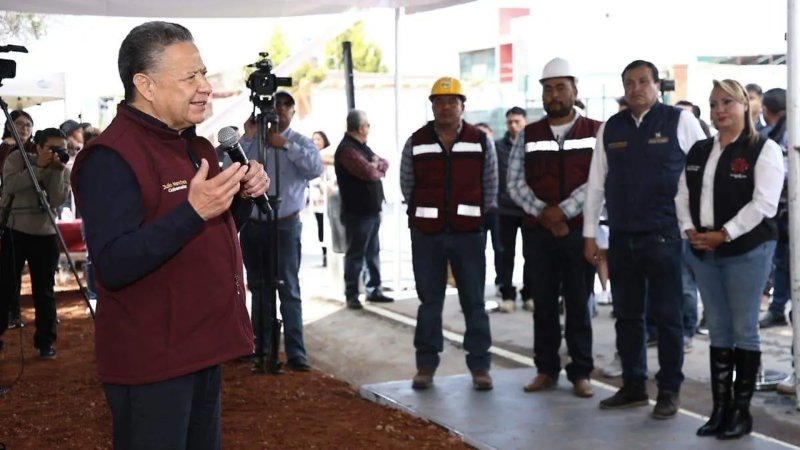
The state of Hidalgo is allocating more than US$179 million to infrastructure projects in Tolcayuca, Villa de Tezontepec, and Zapotlán, as part of a strategy aimed at preparing the region for the establishment of the Development Hub for Well-being, a project that is poised to serve as a regional economic catalyst.
The rationale behind this investment centers on enabling infrastructure. That is, creating the conditions necessary to attract productive capital, reduce operational barriers, and accelerate the establishment of new industrial activities. In this context, road connectivity, the availability of urban services, and the quality of the environment become determining factors in investment decision-making.
One of the priority components is intervention in the road network. The rehabilitation and reconstruction of intermunicipal roads aims to improve the efficiency of transporting goods and personnel, a critical aspect for industrial operations that depend on precise logistics timelines. This improvement in mobility not only impacts costs but also increases the region’s integration into broader productive corridors.
At the local level, the distribution of spending reflects a territorial prioritization. Zapotlán receives the largest investment, with more than US$10 million allocated to paving, avenue rehabilitation, and the improvement of public spaces. These actions aim to strengthen its connectivity and urban functionality in anticipation of increased economic activity.
In Tolcayuca, the amount exceeds US$3.3 million and is directed toward urban works, educational infrastructure, and wastewater treatment. This last component is particularly relevant from an industrial perspective, as it lays the groundwork for growth based on operational sustainability criteria.
For its part, Villa de Tezontepec is channeling more than US$4.5 million into improving access roads, roadways, and urban spaces. With this, the municipality seeks to position itself as a competitive hub within the new economic development framework projected for the area.
State authorities link these projects to a broader public investment policy. In total, more than 1,800 projects have been implemented in the state, backed by a budget exceeding US$1.2 billion, which demonstrates a systematic approach toward strengthening productive infrastructure.
In addition to the physical component, the strategy incorporates project oversight at the state and municipal levels, with the participation of citizen committees, to ensure transparency in the allocation of resources.
At the same time, the expansion of technical and upper-secondary education is being promoted. The creation of new institutions aims to align human capital development with the needs of the industrial sector, thereby closing the loop between infrastructure, talent, and investment attraction.
Taken together, the investment in these three municipalities responds not only to immediate urban needs but also to planning aimed at sparking industrial activity, facilitating the establishment of businesses, and capitalizing on the economic impact of the new development hub in Hidalgo.