Coahuila Leads Mexico’s Auto Parts Growth
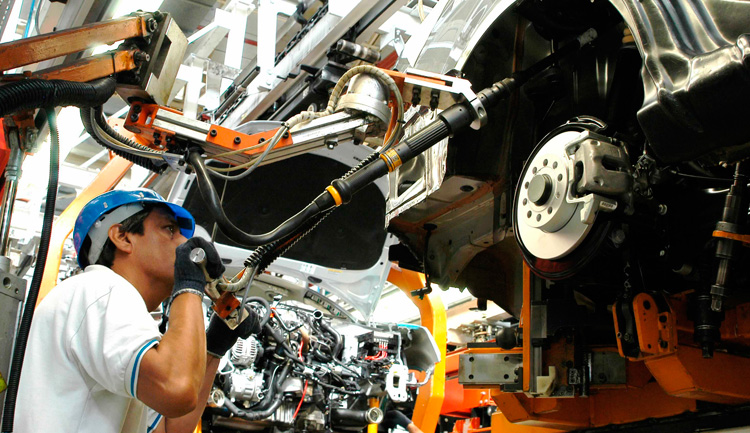
Coahuila remains Mexico’s leading auto parts-producing state, ranking first in annual growth, with a rate of 13.2%. Other major production hubs, including Guanajuato, Nuevo León, Chihuahua, and Querétaro, have consolidated their positions as key engines of the national auto parts industry, while San Luis Potosí and Aguascalientes have also recorded significant expansion.
Economic indicators confirm the sector’s positive performance. Between January and August 2026, Mexico’s auto parts industry generated US$85.82 billion in production, representing an 8.3% increase compared with the same period in 2025. The figures point to continued expansion, provided that trade and infrastructure-related risks can be effectively addressed.
Production growth, particularly in the Bajío region, which includes Guanajuato, Querétaro, and San Luis Potosí, is driven by advanced manufacturing platforms and investment in high-tech components. Electrical components and high-power electronics accounted for 19.4% of national auto parts production and grew by 9.8% between January and August 2026.
To capitalize on this momentum, the National Auto Parts Industry (INA) is leading an assessment of Mexico’s manufacturing capabilities to strengthen the Tier 1 and Tier 2 supply base and meet growing demand from the U.S. market.
However, the industry faces structural challenges, particularly the need to ensure sufficient energy infrastructure in regions such as the Bajío, while developing the specialized talent required for next-generation automotive technologies.
Amid the ongoing geopolitical reconfiguration of global supply chains, INA is working to develop a collaborative strategy with the Ministry of Economy that would integrate the automotive, electronics, telecommunications, and information technology sectors through a cross-cutting approach.
Following the conclusion of the USMCA review, the objective will be to promote import substitution under the Mexico Plan, identifying components that are not currently available in North America and attracting new investment as part of the “nearshoring 2.0” trend.
Meanwhile, the introduction of U.S. tariffs in 2025 accelerated the shift toward greater regional integration under the USMCA. As a result, 44% of the auto parts required by the United States for vehicle manufacturing are now sourced from Mexico duty-free.
While the automotive assembly industry continues to adapt to the changing trade environment, Mexico’s auto parts sector is experiencing higher production and exports. Nevertheless, uncertainty remains over potential changes to trade rules, which could influence long-term investment decisions and the future expansion of North American automotive supply chains.