SNITIS Seeks USMCA Labor Action Against Hansuh
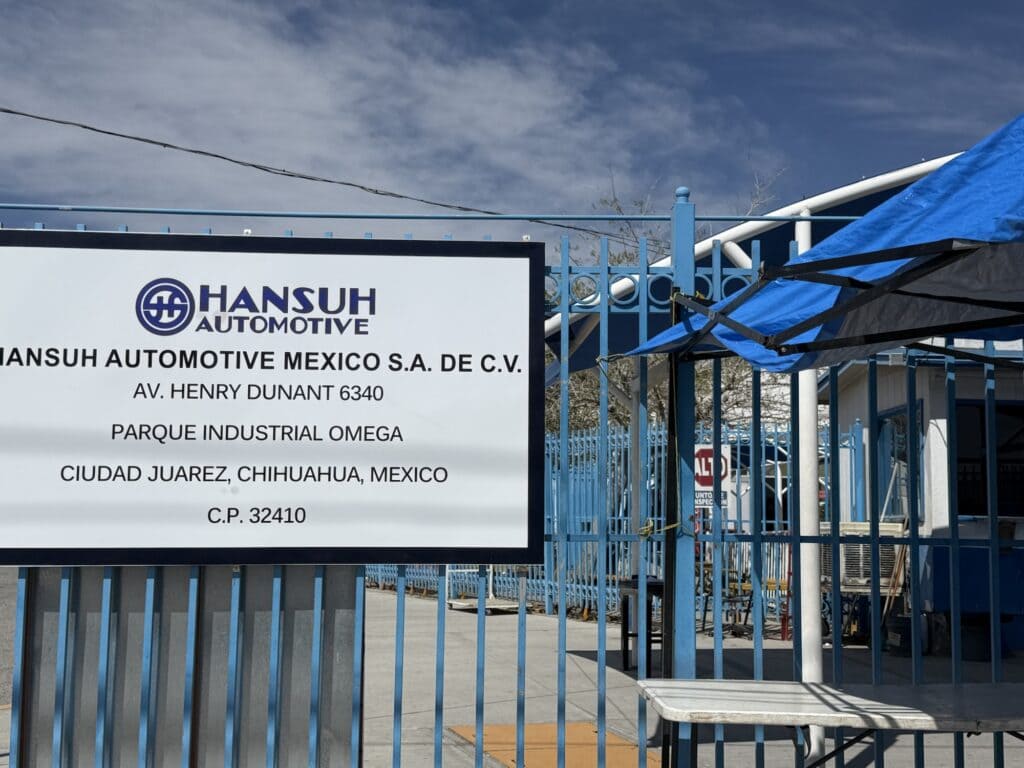
The National Independent Union of Workers in Industries and Services “Movement 20/32” (SNITIS), an organization founded and supported by labor lawyer Susana Prieto Terrazas, has filed a petition with the U.S. Department of Labor to activate the USMCA’s Rapid Response Labor Mechanism (RRM) against Hansuh Automotive México, S.A. de C.V., a South Korean-owned company based in Ciudad Juárez, Chihuahua.
According to a document signed by Ramón Dávila Lerma, Secretary General of SNITIS’s National Executive Committee, workers at Hansuh México’s Plants 1 and 2 have allegedly been denied their rights to freedom of association and collective bargaining. The facilities manufacture cut-and-sewn car seat components that are shipped to an assembly plant in Georgia, United States.
In July, SNITIS filed a strike notice demanding that the company sign a Collective Bargaining Agreement (CBA). Following several conciliation hearings before the Federal Labor Court for Collective Matters, the company submitted a draft agreement in September that included a 6% wage increase and various additional benefits. SNITIS accepted the proposal in its entirety in October.
However, the company subsequently refused to sign the agreement, reportedly citing delays because its owners are based in South Korea.
Beyond the alleged refusal to formalize the agreement, SNITIS has also accused the company of union interference and retaliation, citing video-recorded worker testimonies as evidence.
As a proposed remedial measure, SNITIS is asking U.S. labor authorities to immediately suspend the final customs clearance of goods imported from Hansuh México.
The independent union is also requesting that the company sign the previously agreed collective bargaining agreement, issue a public statement reaffirming its neutrality, and end any alleged harassment or retaliation against employees.
Finally, SNITIS is urging the Mexican government to guarantee an effective judicial remedy, other than a strike, in cases where employers refuse to sign collective bargaining agreements with the union chosen by the majority of their workers.