Agricultural exporters in Jalisco are preparing for labor certification
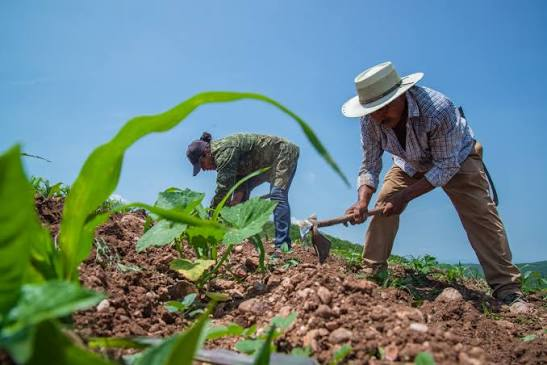
Jalisco has begun work on a pilot program to implement the Labor Certification for Agricultural Exports (CLA), which aims to ensure that avocado and berry export companies, as well as the supply chain, comply with labor obligations such as enrollment in the IMSS, payment of the agricultural minimum wage, and adherence to working hours.
The pilot program includes the San Quintin Valley and Michoacán, the country's main agricultural regions, where the federal Ministry of Labor and Social Welfare (STyPS) is working with producers to establish technical guidelines for certification.
Ricardo Barbosa Ascencio, head of the Jalisco State Ministry of Labor and Social Welfare (STyPS), told El Economista that the goal is to establish criteria that will make it possible to identify, among other things, the relationship between the area under cultivation and the number of workers cultivating that area.
“With this Agricultural Export Labor Certificate (CLA), they aim to ensure that for every hectare planted, there must be a certain number of workers, and these workers must be enrolled in Social Security throughout the entire supply chain—that is, from the small-scale farmer in the countryside who owns a couple of hectares and sells to a marketer, who in turn sells to the exporter,” he emphasized.
“With this Agricultural Export Labor Certificate (CLA), they aim to ensure that for every hectare planted, there must be a certain number of workers, and these workers must be enrolled in Social Security throughout the entire supply chain—that is, from the small-scale farmer in the countryside who owns a couple of hectares and sells to a marketer, who in turn sells to the exporter,” he emphasized.
The pilot program is scheduled to begin with avocado and berry exporters across their entire supply chain. It will also be implemented in Michoacán and the San Quintín Valley.