Hidalgo Leads Mexico’s Economic Growth
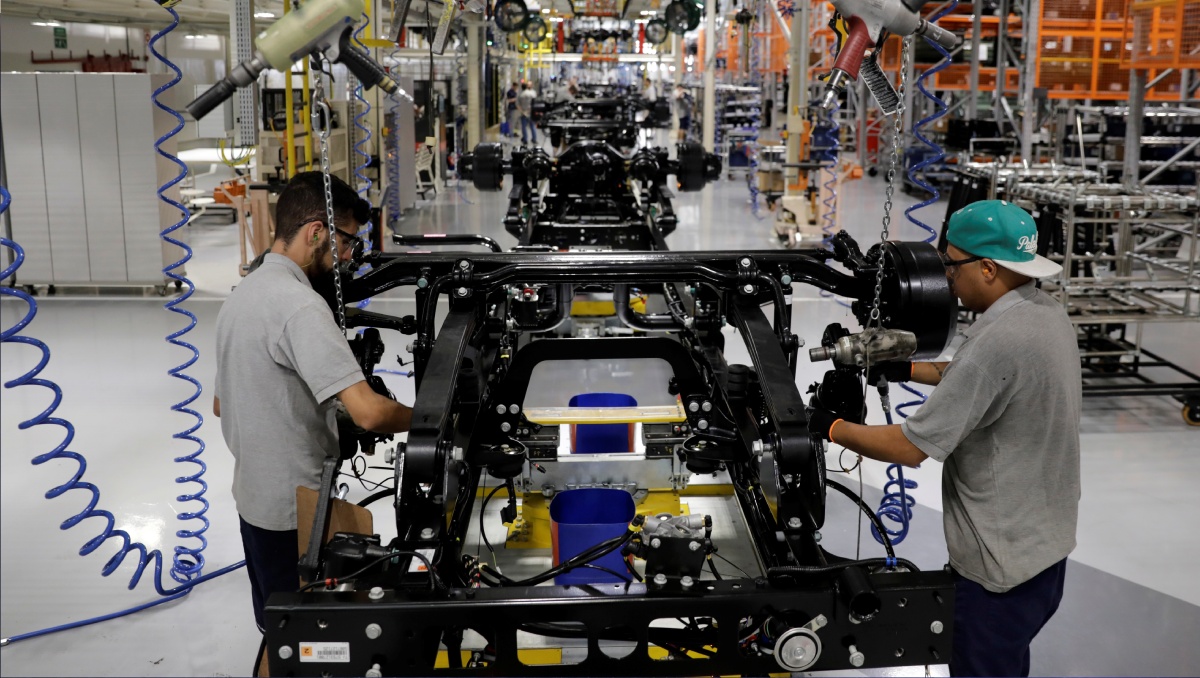
Hidalgo has positioned itself as Mexico’s fastest-growing state, recording an annual economic growth rate of 8.5% in the second quarter of 2026, driven by a 19.1% increase in industrial activity. This represents “a continuation of the positive trend observed since late 2025,” according to economic analyst Héctor Magaña.
“One of the main factors behind these results appears to be the momentum in construction and infrastructure projects, particularly those related to transportation and connectivity,” he said, highlighting projects such as the AIFA-Pachuca train, which could help improve conditions for business activity and encourage the development of new productive projects.
According to economic analyst Kristobal Meléndez, “these hubs are based primarily on how attractive the states are in light of current industrial demands.” In the case of Hidalgo and other states, “they become attractive due to new public works projects and emerging production chains that seek to strengthen the domestic market and take advantage of more modern industrial networks that provide greater certainty.”
According to the Quarterly State Economic Activity Indicator (ITAEE), Colima ranked second in annual economic growth, at 5.80%, followed by Veracruz at 5.11%, Sinaloa at 4.80%, and Tamaulipas at 4.32%.
Overall, 24 Mexican states recorded an increase in economic activity compared to the same period in 2025.
In contrast, Morelos experienced the sharpest annual contraction in the country during the second quarter of 2026, at 5.76%. This marked the state's fifth consecutive quarter of declining economic activity, according to the ITAEE.
“The decline in economic activity is closely linked to the closure of the Nissan plant in the Cuernavaca Valley Industrial City (Civac).” Last March, the facility shut down operations as part of a global restructuring that involved relocating production from Córdoba and Civac to Aguascalientes.
The figures reflect “how production conditions, business decisions, and investment projects can generate very different economic dynamics among geographically close states,” Magaña added.
During the period, all regions recorded positive economic growth. The central region posted the strongest increase, at 2.9%, while the south-southeast region rebounded by 2.7%, ending a nine-quarter downward trend. Meanwhile, the south-central region recorded the smallest increase, at 1.3%, primarily due to the year-over-year contraction in Morelos.