Mexico sets up a space mission to study climate change
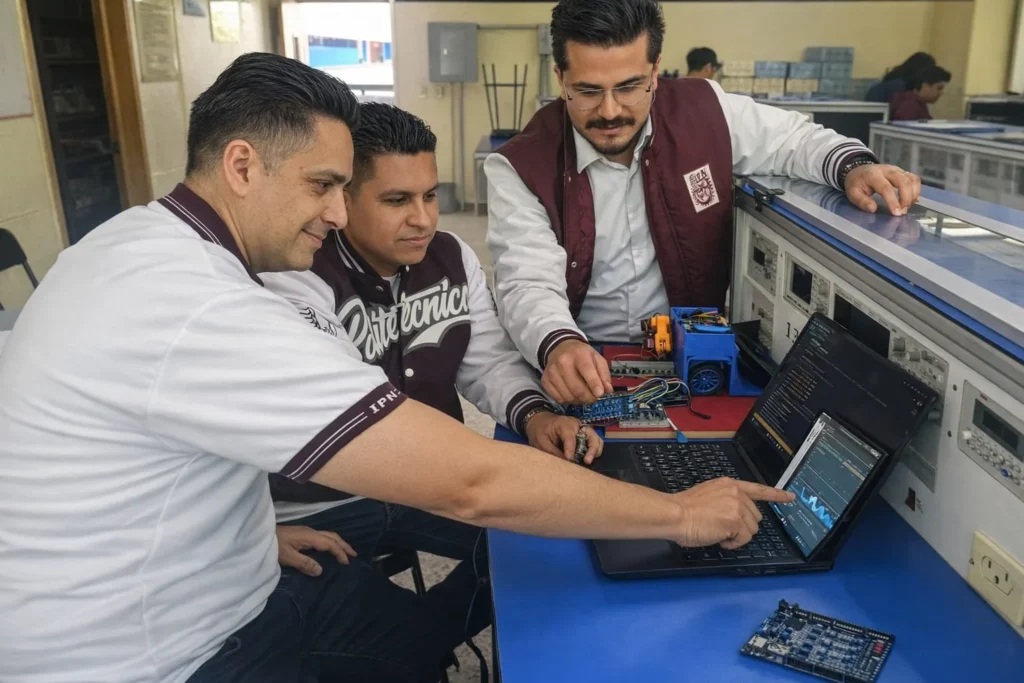
The National Polytechnic Institute (IPN) is advancing the development of Mexican space technology with the THERMAG-1 (Thermal Magnetic 1) project, a scientific payload designed to measure the Earth’s magnetic field from a low-Earth orbit satellite whose mission is scheduled for the first half of 2027.
The project was developed in collaboration with various national institutions and with the participation of the Mexican Space Agency (AEM), with the aim of analyzing the relationship between geomagnetic variability and temperature changes in the atmosphere—in a context marked by the global impact of climate change.
The director of the THERMAG-1 project, Dr. Mario Alberto Mendoza Barcenas—a researcher and coordinator of Cooperation, Regulation, and Outreach at the IPN’s Center for Aerospace Development (CDA)—explained that the mission will enable the recording of magnetic variables to later correlate them with atmospheric and climatic phenomena.
The mission involves deploying a triaxial magnetometer at an altitude of 800 kilometers, from which it will collect key data for monitoring the Earth’s magnetic field—considered the planet’s natural shield against space radiation.
The proposal also includes the installation of an X-band ground station in Mexico, which will allow data to be downloaded from the satellite as it passes over Mexican territory. The IPN emphasized that this project will contribute to Mexico’s standing in the international scientific community and strengthen national development in the aerospace sector.