IDB visits the Confederation of Mexican Workers to discuss labor markets
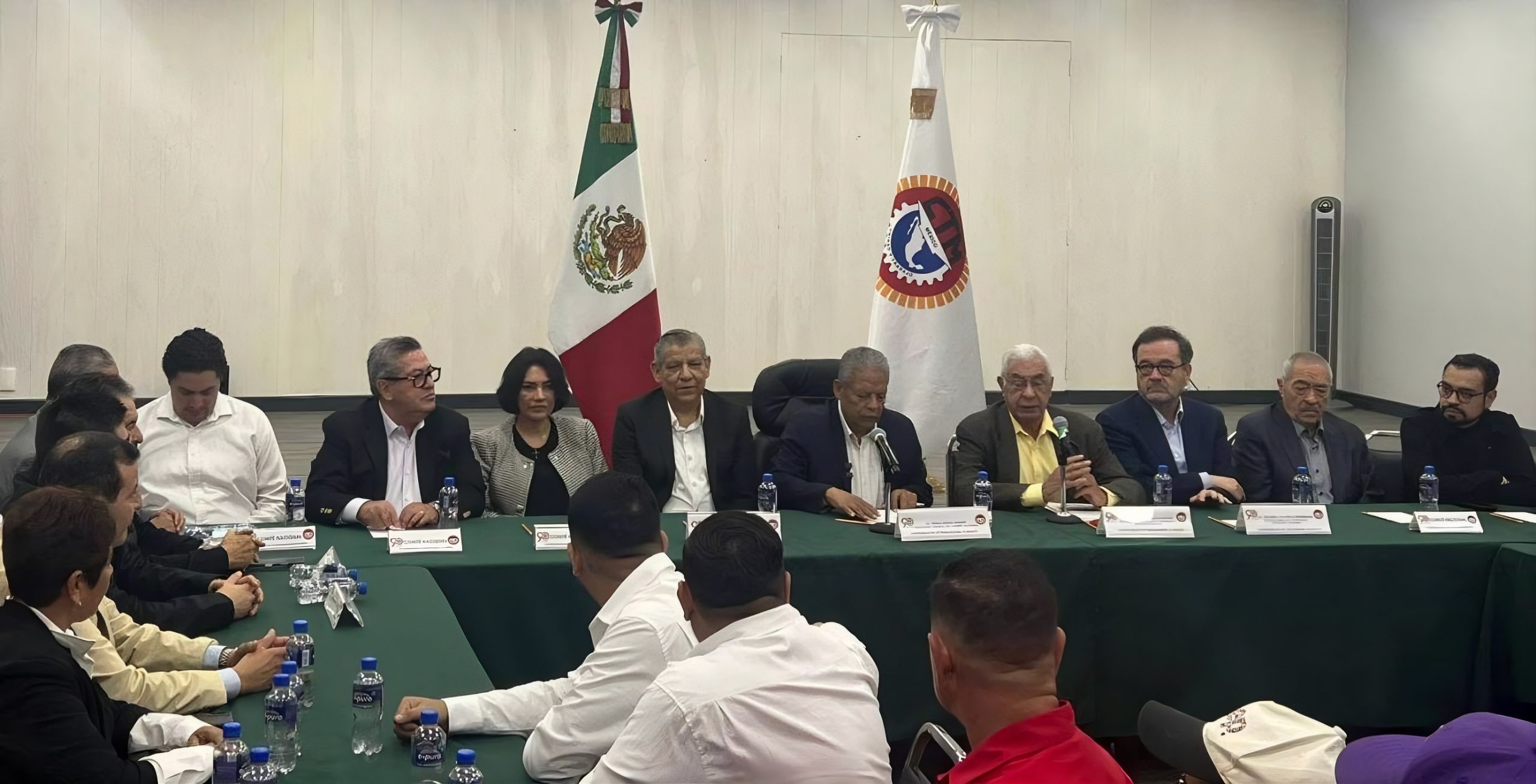
Representatives from the Inter-American Development Bank visited the Confederation of Mexican Workers (CTM) to discuss labor markets and to present the book “Making Labor Markets Work: Improving Productivity and Workers' Well-Being in Latin America and the Caribbean.”
During the meeting, the agency’s chief economist, David Kaplan, presented proposals aimed at boosting productivity and analyzing the country’s wage policy.
Kaplan spoke about how the increase in Mexico’s minimum wage has already completed a cycle, and therefore requires careful review in order to determine future increases once it reaches the median of the wage distribution.
The expert explained that the agenda should focus on increasing productivity through competition among companies, ongoing training, and strengthening collective bargaining with best practices.
For his part, union leader Tereso Medina outlined the CTM’s priorities, which involve making the labor market function through a national agreement based on three pillars: wages, employment, and productivity.
Medina emphasized the importance of putting workers and their families at the center, highlighting the value of the country’s human capital. He also stressed that the path to labor development lies in collective bargaining and mutual understanding between capital and labor, moving away from old patterns of confrontation and overcoming the notion that what benefits companies necessarily harms the workforce.
In his remarks, Medina also emphasized the need to develop a strategy to regain the 100,000 collective bargaining agreements, as the union will lose its collective bargaining representation following its accreditation process in 2024.
The leader emphasized that a national agreement within the labor movement is needed to expand collective bargaining and formal employment under the rules of the new labor model, which requires the approval of these processes through a personal, free, direct, and secret vote.
He also proposed revising the country’s industrial and fiscal policies, promoting tax deductibility for items such as year-end bonuses, vacation pay, overtime pay, and collective benefits—such as grocery vouchers, scholarships, and transportation subsidies—to boost productivity, strengthen purchasing power, and combat informality.
Jose Luis Carazo, secretary of labor for the labor federation, questioned the IDB, expressing the labor sector’s doubts and disagreements regarding the financial institution’s proposals. Carazo argued that productivity analyses should not be used as a justification to hinder the recovery of workers’ incomes, nor to make improvements in working conditions contingent on metrics that historically have not translated into direct well-being for the workforce.