Mexican Student Designs Mars Spacesuit
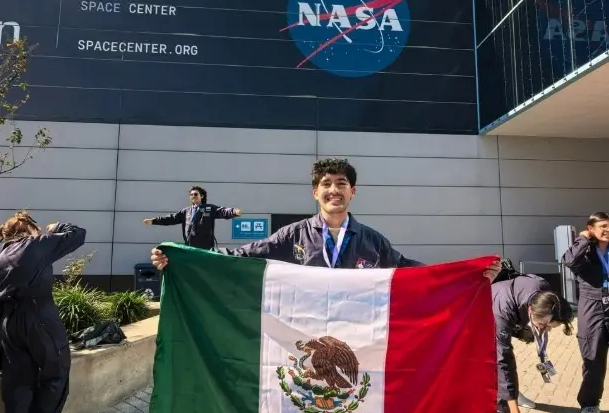
Adolfo Martínez Sabas, a seventh-semester aeronautical engineering student at the Interdisciplinary Professional Engineering Unit, Guanajuato campus (UPIIG), won first place in the 2026 International Air and Space Program (IASP) with a design project for a spacesuit intended for future Mars exploration missions.
The educational program brought together international students in Houston, Texas, from November 8 to 14, with UPIIG celebrating the achievement on its social media as a milestone for the polytechnic community and Mexico.
The proposal was developed in response to an academic aerospace design challenge. Therefore, the recognition applies to the project presented during the program and does not mean that Martínez Sabas built a functional spacesuit ready for a Mars mission.
The International Air and Space Program (IASP) is organized by Aplicaciones Extraordinarias Aeroespaciales (AEXA), a binational company specializing in aerospace technologies. The program includes activities involving lunar robotics, mission control, astronaut training, and aerospace project design. According to AEXA, the winning team may also have the opportunity to send an experiment to the International Space Station (ISS).
The program takes place in Houston and includes activities at aerospace facilities such as Space Center Houston, the official visitor center for the Johnson Space Center. The Benemérita Universidad Autónoma de Puebla (BUAP) has also identified AEXA as the organizer of IASP 2026.
Martínez Sabas is currently pursuing a degree in Aeronautical Engineering at UPIIG, a campus of the National Polytechnic Institute (IPN) located in Guanajuato. Before traveling to Houston, he identified himself as a native of Amapolas del Río, Aguascalientes, where he plans to share his experience with young people through free science talks and workshops.
The first-place achievement highlights the work of a Mexican student in an international aerospace education competition and showcases a design proposal addressing the challenges of human exploration of Mars.