Mexican Student Studies Aerospace Health Research
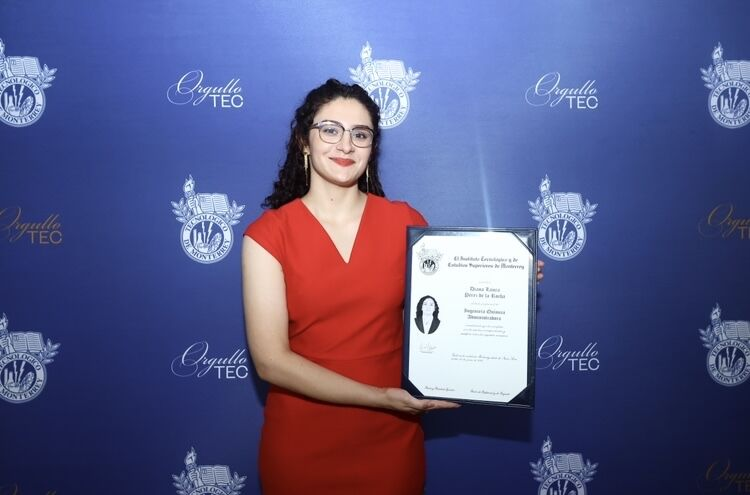
A Tecnológico de Monterrey student is conducting research in Toronto to study how cells respond to gamma radiation and evaluate the potential of an experimental formulation to reduce signs of cellular damage.
At an altitude of 12,000 meters, flight crews are exposed to cosmic ionizing radiation, which can affect their cells.
To investigate these potential effects, Diana Laura Pérez de la Rocha, a Ph.D. student in biotechnology at Tecnológico de Monterrey, is developing and evaluating an experimental topical formulation aimed at reducing cellular damage.
As part of her research, she will complete a six-month fellowship at the Allan Slaight Medical Innovation Lab at the Princess Margaret Cancer Centre, University of Toronto, where she will study cellular responses to gamma radiation and test a formulation containing plant extracts and clinoptilolite.
The research seeks to contribute to a field in which, according to Diana, significant knowledge gaps remain.
Cosmic radiation originates in space and reaches Earth in the form of particles and energy. Although the atmosphere absorbs some of this radiation, its protective effect decreases as altitude increases.
As a result, pilots and flight attendants face greater exposure during the hours they spend in flight, making it an occupational health concern.
The International Commission on Radiological Protection (ICRP) classifies flight crews' exposure to cosmic radiation as occupational and recommends monitoring and recording individual doses, as well as informing personnel about the associated risks.
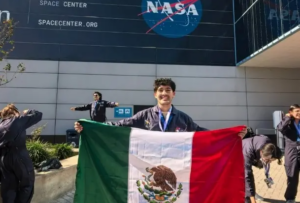
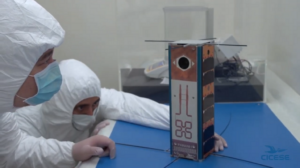
Diana's interest in this subject began when she joined the Tec Aerospace Society (SAERO) and learned more about the aerospace industry.
As she explored potential research opportunities, she realized that the health of people working in the sector received less attention than other areas, such as materials, mechanics, and technology.
“I discovered the medical biophysics community, which focuses on radiation and its effects on tissues, and I really liked that approach,” she recalled.
Through conversations with professionals in the field, she also identified a lack of research into the effects of radiation on aerospace personnel.
These concerns led her to consider focusing her doctoral thesis on developing an experimental topical formulation designed to evaluate its potential to reduce cellular damage associated with ionizing radiation.
During her stay in Toronto, Diana will work with Dr. Shane Harding, a researcher at the Princess Margaret Cancer Centre and an Assistant Professor in the Department of Medical Biophysics at the University of Toronto. His research focuses on radiation-induced DNA damage from an oncology perspective.
In the laboratory, she will evaluate several prototypes of a formulation containing plant extracts with antioxidant compounds and clinoptilolite, a mineral belonging to the zeolite group with adsorption and ion-exchange properties.
To conduct the experiments, she will use gamma radiation as a model and observe how cells respond to exposure. Through fluorescence microscopy, she will analyze proteins associated with DNA damage and repair mechanisms.
Diana will compare irradiated cells treated with the formulation against those that do not receive it. A favorable result would involve identifying fewer signs of cellular damage in the treated samples.
Upon her return to Mexico, Diana will evaluate the formulation's stability under extreme temperature and pressure conditions to simulate some of the environments flight crews experience during operations.
She also plans to collaborate with an aerospace company based in Mexico City to conduct testing under real-world conditions.
Diana sees these collaborations as an opportunity to connect biotechnology and medical biophysics with an industry that needs to place greater emphasis on employee health.
“I'd love to launch a line of research in medical biophysics focused on the aerospace sector,” she concluded.