Puebla Airport Customs Office Expands Capacity
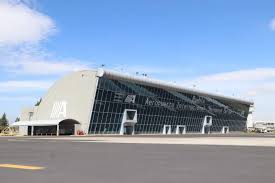
Puebla International Airport, through its customs facility, can serve as an alternative cargo terminal to Mexico City International Airport, with the potential to handle up to 30 metric tons per weekly flight.
Héctor Landero Camacho, president of the Chamber of Commerce, Services, and Tourism (Canaco), explained that companies based in Puebla or operating in the state avoided using the terminal for exports either because they were unaware of it or because the necessary logistical conditions were lacking.
He announced that the state government is planning to expand operations at the airport located in the municipality of Huejotzingo, starting with an increase in direct flights from 8 to 21 per day.
The increase in direct flights highlights the potential for expanding operations, while also revealing that, over the 40 years that the Hermanos Serdán Airport has been in operation, its potential has gone untapped.
Canaco is interested in reactivating the Customs Complex, as it has a foreign trade division that serves as a hub for businesses looking to export.
He noted that export activity continues to grow thanks to companies in the agro-industrial sector that have begun to secure clients with high demand for orders in the United States, with shipments being made through Mexico City or Felipe Ángeles Airport.
Following the withdrawal of Grupo World Trade Center Confianza (GWTC), which operated for 19 years, the Logistics Center and Strategic Bonded Warehouse has been inactive since June of this year, thereby complicating the direct shipment of cargo from the state of Puebla.
Landero Camacho noted that investors are interested in operating this facility, which could become a hub for exports from the central region of the country, primarily for neighboring states such as Morelos and Tlaxcala—the latter of which is a major producer of auto parts.
He emphasized that the project aims to strengthen local logistics infrastructure to boost the import and export of goods for strategic sectors such as the food and automotive industries in Puebla.
“We have to take advantage of this opportunity to ship goods. It’s a warehouse that was operating at 3 or 4 percent capacity and didn’t have much business,” he said.