U.S. Auto Market Sees Steeper Decline in August
The slowdown in new-car sales accelerated in August in the U.S. market compared to the previous month's results, according to expert estimates.
However, several factors made this outcome predictable, and it ultimately exceeded analysts' expectations.
Cox Automotive estimates that total volume for the eighth month of the year reached 1.38 million light passenger vehicles, a figure representing a year-over-year decline of -5.8%.
The analytics and consulting firm had estimated prior to the end of the month that the decline would be 8.5%, due in part to there being one fewer sales day compared to August 2025, as well as the fact that the Labor Day holiday weekend fell outside the August reporting period this year.
“Ultimately, the August results suggest that the U.S. automotive market—at least in terms of volume—continues to perform better than expected,” the company said in its report.
Another factor contributing to the result was the sharp drop in electric vehicle sales, as demand for these models peaked a year ago as the fiscal incentives encouraging their purchase were set to expire.
A notable example is the Ford Mustang Mach-E, whose sales plummeted by 72.5%, with just under 2,000 units sold in August.
Year-to-date, the electric Mustang has recorded deliveries of fewer than 15,500 units, representing a 55% decline compared to the first eight months of 2025.
According to unofficial estimates, the three largest automakers in the U.S. market recorded declines in sales.
For General Motors and Ford, the decline was in the double digits (-11.%), with sales of 223,000 and 164,000 units, respectively, while for Toyota it was -4.4%, with 215,500 vehicles delivered.
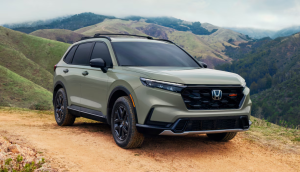
Honda, on the other hand, benefited from record demand for hybrid vehicles (HEVs) due to high gasoline prices, which helped it close the month with a moderate 1% increase in sales of 134,000 units, including its luxury brand Acura.
The Japanese automaker has accumulated sales of 1,027,465 units so far this year, a volume that exceeds the result for the same period in 2025 by 3.5%.
Stellantis and Kia also posted increases of around 1%, delivering 108,000 and 84,000 units, respectively; however, for the South Korean automaker, this marks its best August sales volume to date.
Lower Volume, Higher Value
Experts view the August results as solid despite the negative variations, as it must be taken into account that last month had 26 sales days—one fewer than last year—and Labor Day fell in September, shifting one of the industry’s highest-selling weekends outside the August period, unlike what occurred in 2025.
“New-vehicle sales in August remained solid despite considerable economic uncertainty and ongoing trade disputes that are dominating the headlines,” said Charlie Chesbrough, senior economist at Cox Automotive.
The analyst noted that high gas prices, rising interest rates, and historically low consumer confidence have not deterred new-car buyers from making a major purchase as much as one might expect.
“The current market reminds us that today’s new-car buyers are wealthier, with excellent credit histories or cash reserves, and may not be as affected by inflationary pressures as other consumers,” he explained.
Chesbrough estimated that if the economy and the stock market manage to stay on a growth trajectory—even if it is volatile—new vehicle sales are likely to follow suit.