U.S. Auto Sales Post Strong Quarter-End
Strong demand from fleet buyers, combined with an influx of buyers with ample budgets, kept the U.S. auto market dynamic enough to close out September with a sales increase of nearly 7%, according to estimates by industry experts.
Cox Automotive estimates that sales volume for September increased by 6.5% compared to the previous year but decreased by 2.7% compared to last August. However, the analytics firm noted two seasonal factors that made month-over-month comparisons difficult.
Last month had 25 sales days—one more than in 2025 but one fewer than in August—and Labor Day fell in September this year, whereas last year it fell in August.
In this context, the joint estimate by JD Power and GlobalData indicates that sales reached 1,330,100 units, representing a 2.6% year-over-year increase. However, when comparing the same figures without seasonal adjustment, the result is a 6.9% increase compared to September 2025.
These firms project that total new vehicle sales in the third quarter of 2026 reached 4,090,400 units, a slight decline of -0.5% compared to the same period last year, when considering the same number of sales days.
According to Charlie Chesbrough, a senior economist at Cox, the result was attributed to “strong fleet sales, buyers’ increased purchasing power, and greater access to credit, all of which are helping this market remain relatively strong despite the challenges.”
“High inflation and historically low consumer confidence have not discouraged buyers as much as one might expect. Today’s new-car buyers have greater purchasing power, so they may not be as affected by inflationary pressures as other consumers,” the expert added.
Asian Automakers on the Rise
According to Chesbrough, the real story here is that the market continues to grow, driven primarily by the strength of Asian automakers. The executive estimates that brands from that region accounted for more than half of new car sales in the U.S. for the second consecutive quarter, approaching record levels of market share.
At the same time, he estimates that the Big Three in Detroit will see their market share drop to just over 36 percent—the lowest level on record.
“As long as consumers continue to opt for hybrid and multipassenger vehicles—segments in which Asian manufacturers hold significant advantages—this shift in market share is expected to continue for the rest of the year,” he noted.
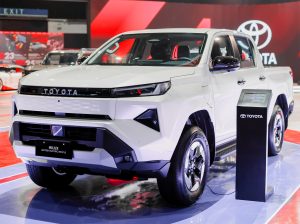
Toyota provided the perfect example of this, reporting an 8.4% increase in its September sales volume, which reached 201,306 units. The world’s largest automaker reported that its deliveries of electrified models surged 37.8% to a total of 117,215 units, accounting for 58.2% of the total.
Toyota’s total sales in the U.S. market so far this year closed out the third quarter at 1,876,614 units, a result that was marginally higher (0.3%) than that of the first nine months of 2025.
Its compatriot Honda posted a double-digit increase of 15.9%, with a volume of 121,796 light vehicles. It was the sixth consecutive month of growth for the main brand and the fifth for the premium Acura division.
The Japanese automaker noted that this was its best third quarter ever in terms of hybrid demand, with more than 106,000 deliveries. Sales of the electrified Accord rose 22%, while the hybrid CR-V saw a 21% increase.
It also reported that in September, sales of the HR-V compact crossover rose 14.5%, setting a new third-quarter sales record “despite low inventory levels.”
As for the premium ADX model, the company stated that the vehicle leads its segment with approximately 30% of retail sales.
South Korean twins Hyundai and Kia joined the party with increases of 9.1% and 17.6%, respectively, delivering 77,439 units in the former case and 77,000 in the latter. This marks the highest volume for a month of September for both brands.
For Kia’s results, the affordability of the K4 was key. Deliveries of the compact model surged 43.4% last month, totaling 12,658 units, making it the brand’s second-best-selling model, trailing only the Sportage.
It’s also worth noting that the Asian brand sold 514 units of the new EV3 electric crossover in its first month on the U.S. market.
Hyundai, for its part, revealed that its hybrid sales increased by 39% to a total of 21,578 vehicles, a figure representing 28% of its monthly volume. Meanwhile, Kia said its hybrid deliveries surged 152% last month, but did not provide a specific figure.
Kia has accumulated sales of 667,386 units so far this year, a 4.9% increase compared to the January–September period of 2025, while Hyundai has sold a total of 697,464 vehicles, representing a 2.8% increase.
Both brands are on track to break last year’s annual sales records.
Mazda snapped a two-month streak of declines with a 31.9% rebound, selling 34,519 vehicles. However, the Hiroshima-based automaker has recorded year-to-date sales of 310,268 units, a 2.9% decline compared to 2025.
Nissan, for its part, reported a quarterly increase of 1.4% in deliveries, totaling 226,474 vehicles, while its year-to-date sales stand at 716,283 units, representing a marginal increase of 0.6% compared to the first nine months of last year.
Detroit in a Slump
General Motors (GM), the market leader, saw a -5.5% decline in the third quarter due to a sharp drop in electric vehicle deliveries. Sales volume for the Chevrolet brand fell by -4.4%, GMC by -4.7%, and Cadillac by -30%.
Buick was the exception, reporting a 7.9% increase that ended a streak of four consecutive quarters of declines.
All of its electric vehicles, with the exception of the Chevrolet Bolt and the Cadillac Optiq, saw double-digit declines. However, the latter is the only model of its kind that has maintained positive performance throughout the year across GM’s entire lineup.
In contrast, sales of the zero-emission version of the Chevy Equinox plummeted by 92%, those of the Blazer EV by 84%, the Cadillac Lyriq saw a decline of 51%, the Chevrolet Silverado EV by 58%, and the Hummer EV by 73%.
The Detroit giant has sold 2,012,299 vehicles this year, representing a decline of 6.4% compared to the first nine months of 2025.
Ford Motor Company managed to retain its third-place ranking in market share by a narrow margin over South Korea’s Hyundai and its subsidiary Kia, despite its quarterly sales falling by 6.6% to 509,764 units.
So far this year, the Blue Oval has delivered 1,516,279 vehicles (1,516,279), a figure representing a decline of -8.6% and a difference of less than 90,000 units compared to the combined sales of Hyundai and Kia, which totaled 1,426,583 units, marking a 3.9% increase compared to 2025.
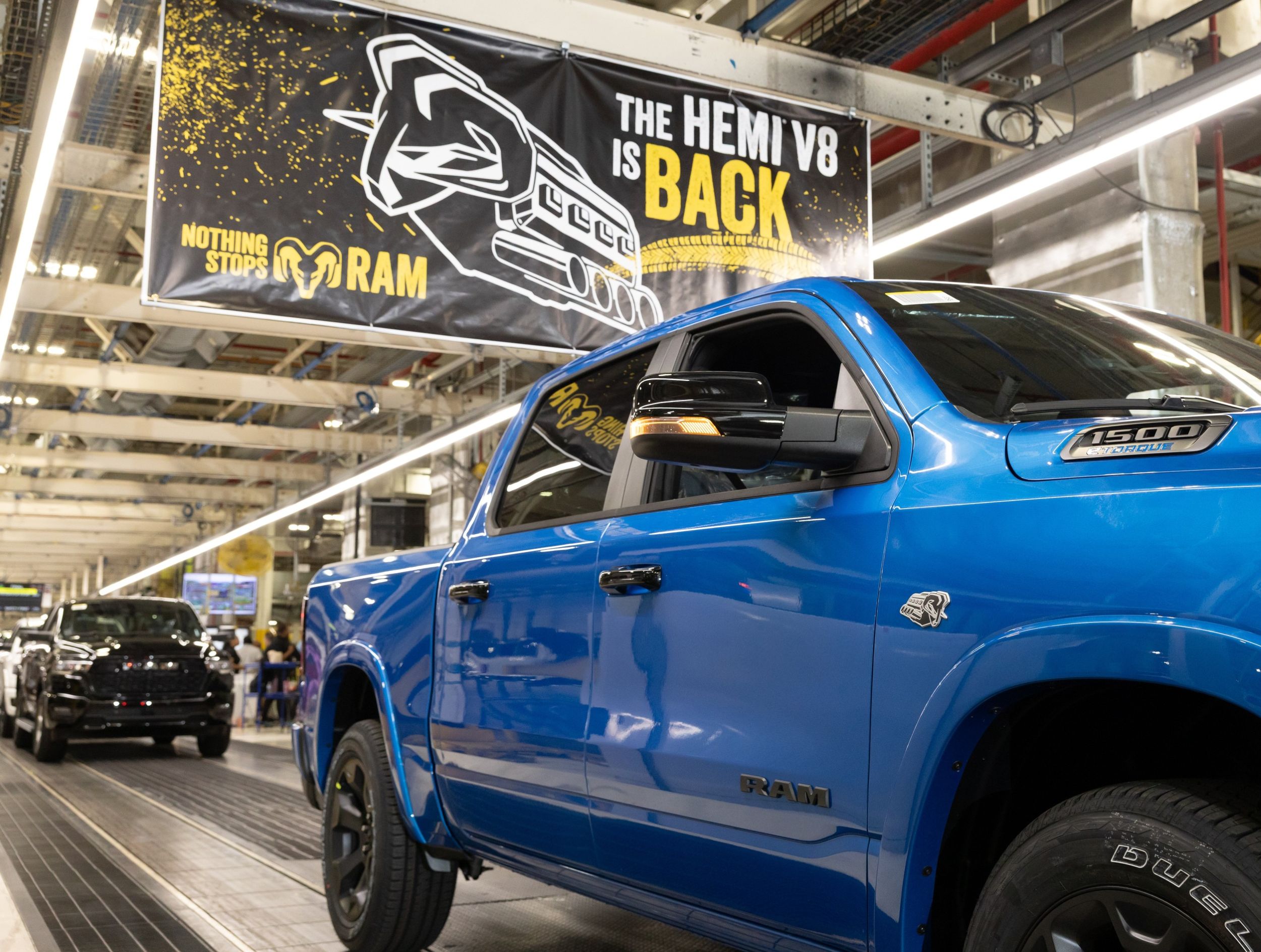
Stellantis posted flat performance in the third quarter, with a volume of 324,277 vehicles, as a 20% plunge in Jeep brand sales was offset by a 29% rebound in the Ram division, a 6.4% increase at Chrysler, and a 1.6% rise at Dodge.
This performance led the Ram brand, created in 2009, to surpass Jeep in quarterly sales for the first time, with 134,072 and 128,542 units, respectively.
The multinational automaker has accumulated sales of 958,463 vehicles, a figure that exceeds last year’s volume by 3%.
Premium Brands Capitalize
BMW sold 106,741 units during the third quarter, including those of the Mini brand but excluding those of the ultra-luxury Rolls-Royce division. This figure represents a 2.5% increase over the previous year.
The Bavarian automaker has sold a total of 307,402 vehicles so far this year, representing a 3.4% increase compared to the first nine months of 2025.
* This report will be updated with figures from Volkswagen and Audi when they become available.