Mexico Air Cargo Grows 5.5%
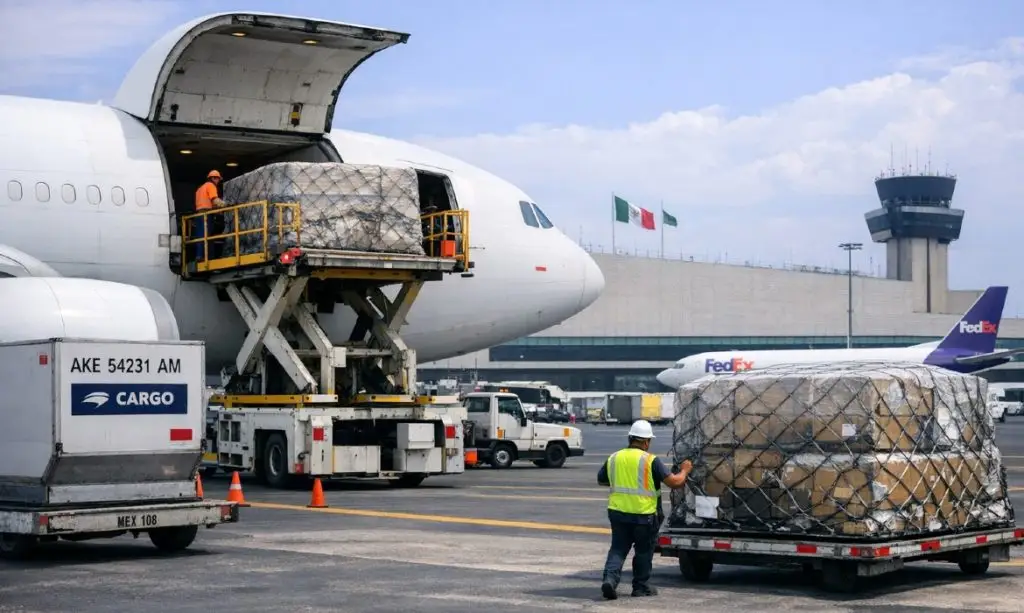
Between January and September 2026, air cargo handled through Mexico’s major airports reached 946,609.9 metric tons, a 5.5% increase compared with the same period in 2025, when 897,375.1 metric tons were recorded. This growth was supported by the performance of the international segment, which offset the decline in domestic traffic.
In September, total air cargo volume reached 110,725.9 metric tons, up 13.9% compared with the same month last year. International cargo amounted to 78,553.9 metric tons during the month, representing annual growth of 16.9%, while domestic cargo totaled 32,172 metric tons, an increase of 7.1%.
The difference between the two segments is also reflected in the year-to-date figures. From January through September, international cargo totaled 669,955.2 metric tons, compared with 618,183.9 metric tons during the same period in 2025. This represents an 8.4% increase, equivalent to an additional 51,771.3 metric tons.
However, domestic cargo fell from 279,191.2 to 276,654.7 metric tons, a decrease of 2,536.5 metric tons, or 0.9%. Consequently, growth in international cargo helped sustain the overall increase in air freight volumes across the country.
International cargo volumes increased significantly at the five major airports in this segment. Santa Lucía handled a total of 308,452.7 metric tons, followed by Mexico City with 146,847.4 metric tons, Guadalajara with 119,888.2 metric tons, Monterrey with 35,260.6 metric tons, and Querétaro with 18,011.9 metric tons.
Guadalajara also performed particularly well in this segment, with volumes rising from 100,839.5 to 119,888.2 metric tons between January and September.
In the domestic segment, Querétaro reached a cumulative total of 43,710.8 metric tons, while Mexico City maintained the highest volume, with 41,571.4 metric tons. Monterrey, meanwhile, saw its volume increase to 27,037 metric tons, while Guadalajara recorded a decline to 31,706.8 metric tons.
Ciudad Juárez posted the largest cumulative percentage increase, with volumes rising from 5,295.3 to 9,701 metric tons. In contrast, San Luis Potosí recorded a decline to 16,333.7 metric tons, while Santa Lucía fell to 5,408.3 metric tons.
The results reveal that growth in air cargo volumes was concentrated in international operations, while the domestic segment posted a decline on a year-to-date basis. For airports with significant logistics activity, September’s performance and the differences between the two segments highlight the varying levels of activity across Mexico’s air transport infrastructure.