Geotechnical Innovation Aims to Reduce Risks and Carbon Footprint
The incorporation of technology into geotechnical construction has become an opportunity to increase the safety and durability of construction projects in Mexico and to reduce their environmental impact. Experts from the Mexican Association of Civil Engineers (CICM) highlighted the need to integrate research, design, construction, and monitoring.
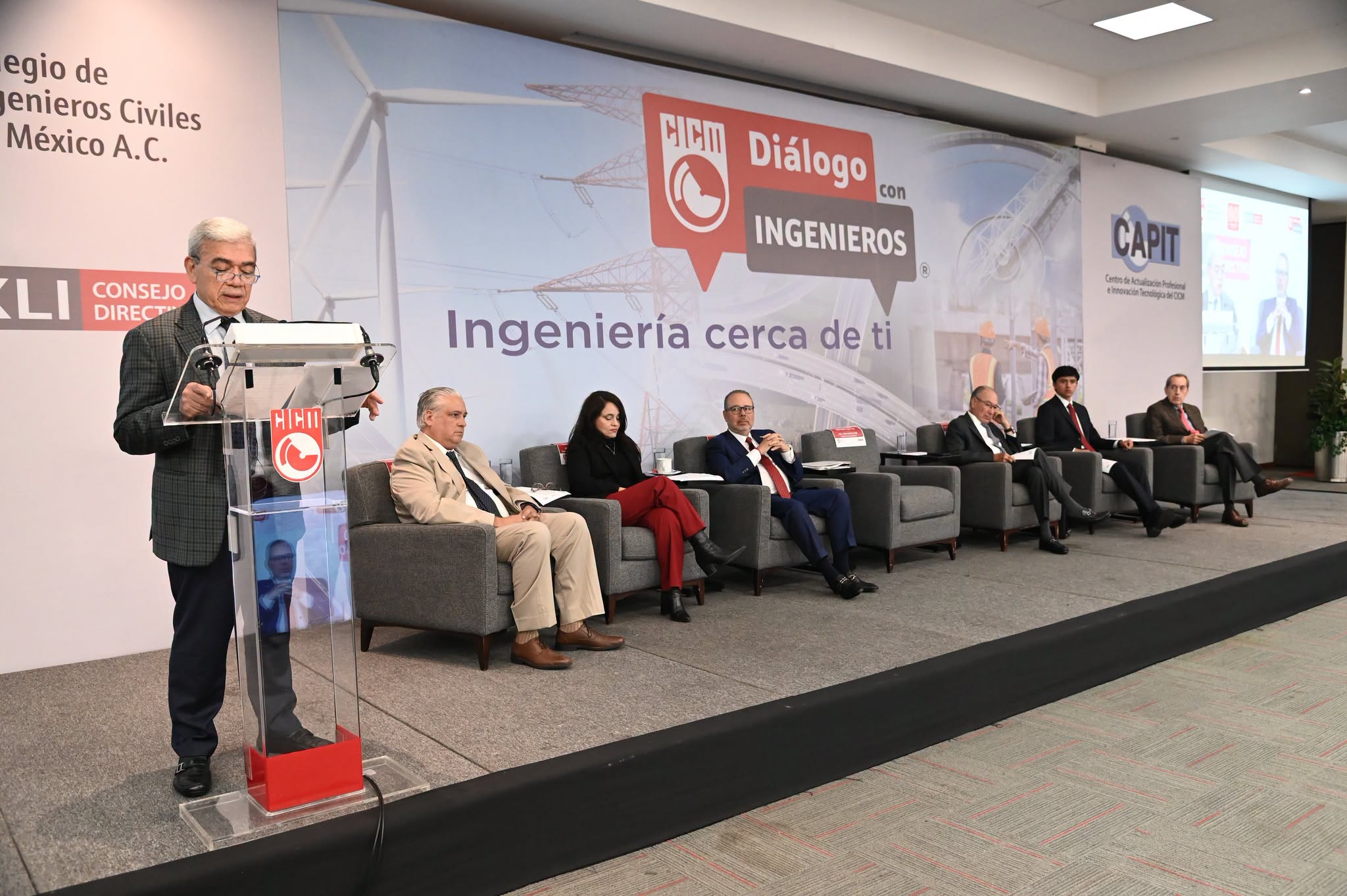
During the conference titled “Some Technological Advances in Geotechnical Construction,” held as part of the CICM’s “Dialogue with Engineers” series, the organization’s vice president, a professor at UNAM, and CEO of Pilotec, Walter Iván Paniagua Zavala, noted that Mexico could implement and refine technologies and procedures that are already in use worldwide.
The expert believes it is necessary to strengthen applied research and the relationship between universities and businesses in order to incorporate risk management during the design and construction phases, and he also emphasizes the importance of streamlining the patent registration process to promote national technological development.
Jesús Campos López, president of the 41st CICM Board of Directors, emphasized that the development of new technologies in geotechnical engineering is necessary to improve safety and extend the service life of structures.
Similarly, carbon footprint calculators—developed by UNAM—have been added to the geotechnical toolset, allowing engineers to identify which foundation components for a construction project generate the most CO₂ emissions.
For her part, Alexandra Ossa López, Geotechnical Coordinator at UNAM’s Institute of Engineering, shared that innovation in this field seeks to develop processes that are more instrumented, measurable, and automated.