Industrial Lubricants Drive Business Growth

Industrial lubrication is no longer solely associated with machinery maintenance; rather, it has become a factor that directly impacts production costs, energy efficiency, and the operational continuity of manufacturing plants.
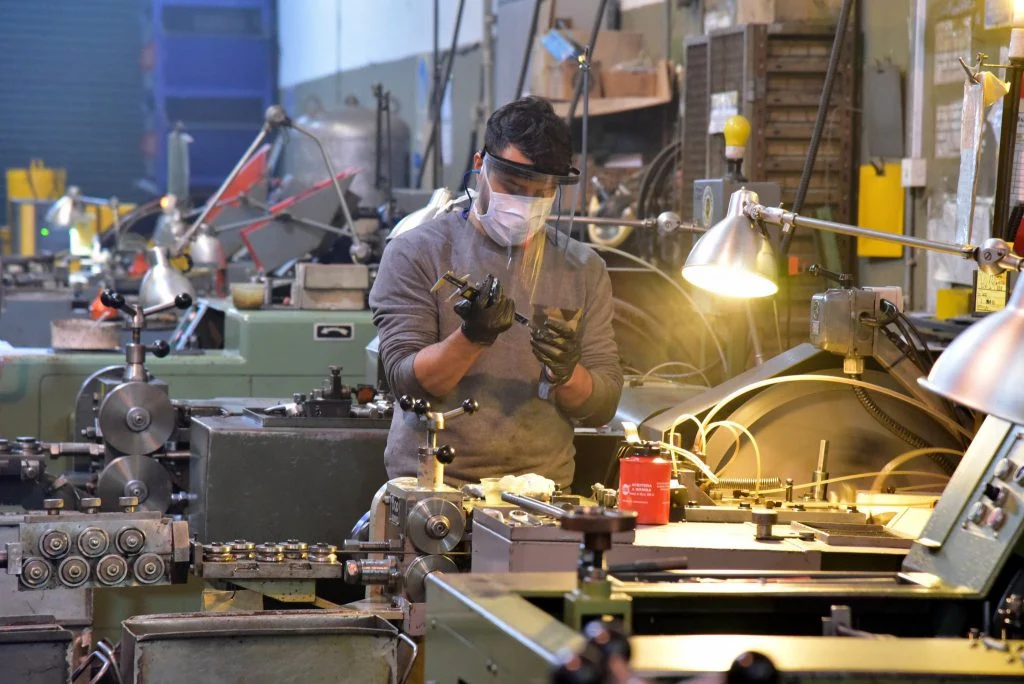
During the Mobil Talks Manufactura event, held in Querétaro under the theme “Precision That Maximizes Your Productivity,” Rubén Baca, Engineering Manager for Mexico, Central America, and the Caribbean at ExxonMobil, emphasized that today’s industrial processes require equipment capable of operating at high speeds, temperatures, and loads, which places greater demands on components, as well as necessitating a more precise lubrication strategy.
Baca explained that using the correct lubricants reduces friction between components and extends the service life of gears, bearings, pistons, and other components subjected to severe operating conditions. Similarly, the strategy must be evaluated based on the total cost, which includes variables such as production, maintenance, energy consumption, spare parts, and labor, as well as the direct cost of the lubricant.
For Exxon Mobil, reducing maintenance costs does not necessarily mean purchasing lubricants at a lower price, but rather using technologies capable of generating savings throughout the equipment’s operational life cycle. Baca emphasizes that some products can reduce energy consumption by 3.6 to 4 percent, although this also depends on the application and operating conditions.
Component replacement is also taken into account, so lubrication is integrated into a strategy aimed at producing more with the same resources by reducing friction, energy consumption, wear, and the frequency of maintenance.
Technological advancements at plants are evolving to enable equipment monitoring; as a result, ExxonMobil is developing solutions related to telemetry and sensors that track machine condition and performance, allowing companies to schedule maintenance interventions in advance. Although it is not possible to eliminate failures entirely, it is possible to reduce their frequency and improve companies’ ability to plan maintenance interventions.
Baca argues that industrial lubrication strategies should be aligned with three objectives: productivity, safety, and environmental performance; and in this way, lubrication would cease to be merely a maintenance input and would become part of a broader strategy for asset reliability, energy efficiency, and production continuity.