Mexico’s Automotive Industry Is Being Reshaped by Inertia
The most recent announcement by Toyota is just part of a much broader process of reshaping global supply chains, which—if not given the necessary attention—could leave Mexico out of the competitive race to host a sector as strategic as the automotive industry.
So far, none of these changes have been accompanied by signs of potential layoffs or plant closures, although the fear remains latent for obvious reasons.
However, this realignment also presents an opportunity for the country to capitalize on the lessons learned during the era of globalization and position itself as a manufacturing hub with unique qualities.
The Big Picture
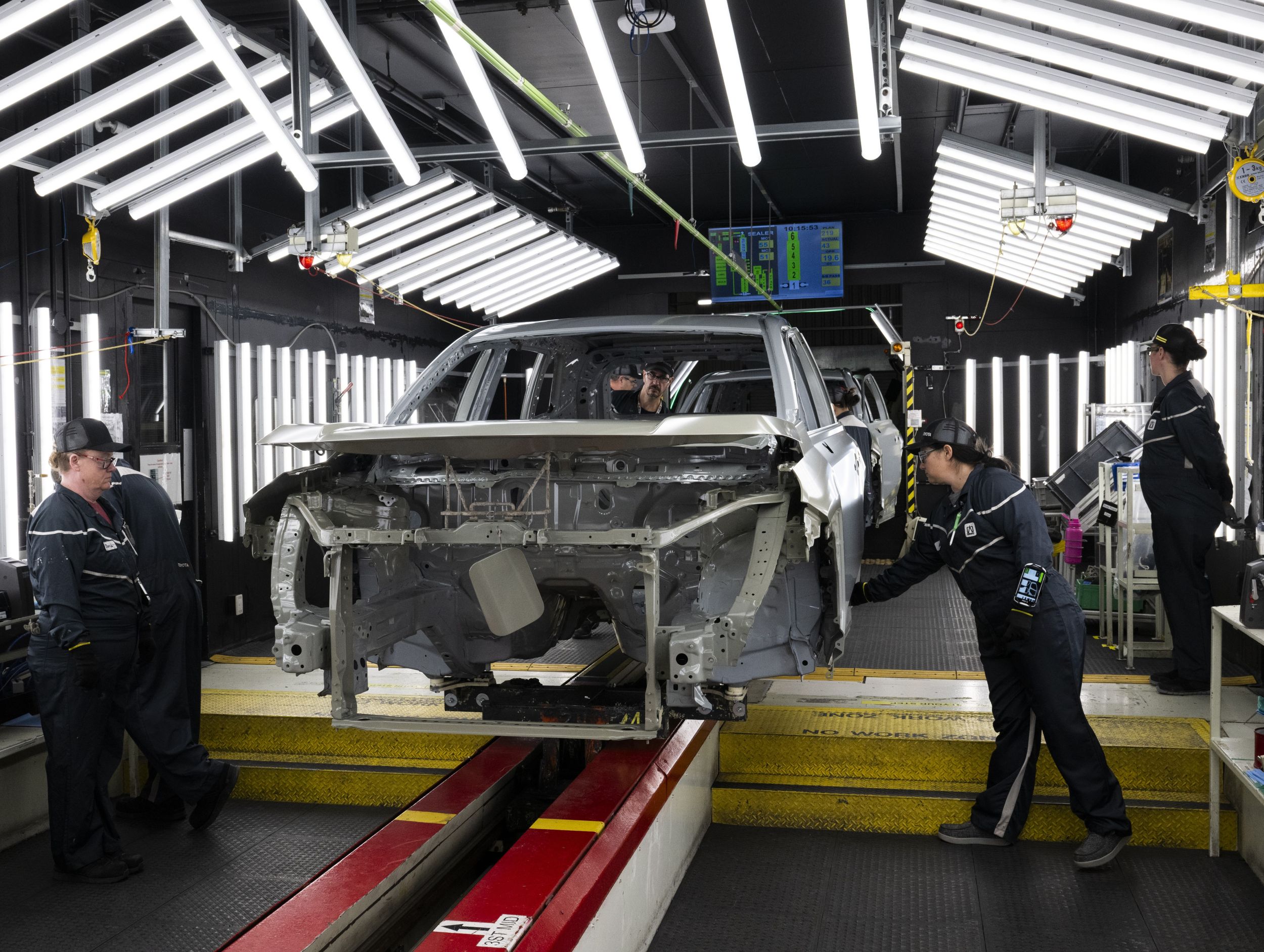
Prompted by the Trump administration’s tariff policy, the world’s largest automaker announced that it will move production of its Tacoma midsize pickup truck from Tijuana, Baja California, to a new plant it will build in San Antonio, Texas.
The Japanese automaker was clear about the figures for the Texas project: a $3.6 billion investment, a production capacity of 150,000 vehicles, and 2,000 jobs; however, it did not specify what will happen to the Mexican facility and merely confirmed that its other source of Tacomas for the global market—the plant in Apaseo el Grande, Guanajuato—will not be affected.
The Uncertainty
Not even the authorities in Baja California have been able to get a clue as to what lies ahead, so they have tried to reassure the public by pointing out that the process will take four years to take effect.
However, there is a possibility that, like other OEMs that are adapting to the situation, it will replace the production volume being shifted with a new model that fits within the available capacity.
Such is the case with General Motors, which is also undergoing a costly restructuring in line with the new reality—a process that involves the partial or total transfer of production of certain models from Mexico to its neighboring country.
The Detroit giant plans to produce two models in Ramos Arizpe—the Aveo and the Groove, both part of the Chevrolet brand—whose previous generations were already manufactured here but are currently imported from China.
Although the value and target market for these products fall far short of the figures associated with the outgoing production programs, the move demonstrates that automakers are not willing to let the substantial investment already made in Mexico—in both infrastructure and human capital—go to waste.
The Scenarios
In Toyota’s case, the most likely scenarios are the closure and sale of the Tijuana plant or the replacement of that production capacity with a new product. However, the model must be compatible with the existing architecture to be a successful business venture.
That is why producing another midsize pickup truck at that site—such as the Toyota Hilux, which is currently manufactured in Argentina and enjoys great popularity throughout Latin America—is highly unlikely, though not impossible.
In fact, there is already a precedent for shifting production from that South American country to Mexico, as was the case with Nissan and its, coincidentally, mid-size pickup, the NP 300 or Navara, whose production was consolidated in Aguascalientes after closing both a factory in the province of Córdoba and the CIVAC complex that operated in Cuernavaca, Morelos.
Although less likely, there is also the possibility that Toyota could find a way to maintain at least part of its current production capacity, since, as mentioned earlier, production of the Tacoma for the global market is currently concentrated at the plants in Tijuana and Guanajuato.
Another incentive lies in the flexibility inherent in the body-on-frame architecture used in Baja California, which is compatible with at least four other models in the current lineup—all of which are higher-value than the Tacoma and would likewise have preferential access to certain markets if assembled in Mexico.
If the Tijuana plant closes, its location could attract interest from a Chinese automaker, as it offers logistical advantages for using the facility at least to assemble CKD (Completely Knocked Down) kits—a method that, while often criticized for valid reasons, is how many automakers currently exporting from Mexico initially began operations in the country.
An example of this is the closure of the COMPAS (Cooperation Manufacturing Plant Aguascalientes) facility, which produced Mercedes-Benz and Infiniti vehicles; it has already received purchase offers despite resistance from both Nissan executives and the Mexican government, which, according to national press reports, has requested that all negotiations on the matter be put on hold, at least until the USMCA review is complete.
The Challenge
For these possibilities to materialize, it is necessary to restore certainty, which now hangs by a thread now that reviews of the USMCA will be part of daily life rather than an occasional process.
Without that certainty, it will be more difficult to encourage new investment and, with it, the advancements needed to keep the industry competitive not only in Mexico but throughout the rest of North America.
Such is the case with BMW, whose plans in Mexico to launch its new generation of cutting-edge vehicles, known as Neue Klasse, remain firm despite the challenging landscape in the region and the rest of the world.
Like this one, other programs currently in the development stage could be hosted at plants across the country if a framework is created that provides certainty not only to existing players but also to startups and emerging sub-brands seeking to subcontract idle capacity.
To achieve this, the public and private sectors must coordinate efforts aimed at creating these conditions, rather than adopting a passive stance and letting things fall into place by inertia.
The challenge is to provide an environment conducive to consolidating these projects before someone else does.