Tariffs Challenge Mexico’s U.S. Auto Lead
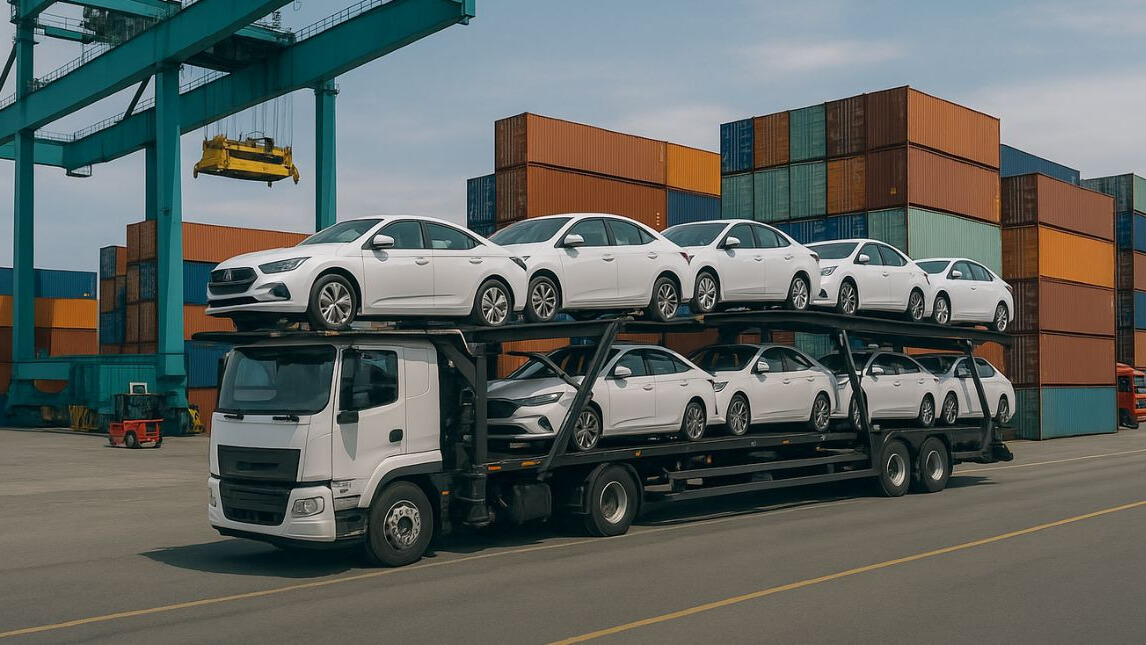
Last July, Mexico lost its position as the leading supplier of passenger cars to the United States, being overtaken by Japan and South Korea, despite maintaining its lead during the first half of 2026.
The monthly decline came amid U.S. tariffs on the automotive sector. Diego Marroquín Bitar, a researcher at the Center for Strategic and International Studies (CSIS), warned that these measures are affecting regional trade and said that further tightening the USMCA’s rules of origin could increase costs and encourage production to move outside North America.
Between January and July 2026, the value of U.S. passenger car imports from Mexico fell 20% compared with the same period in 2024, even as total U.S. goods imports from Mexico increased by nearly 24%.
“On average, Mexican vehicles contain about 40% U.S.-made components. In contrast, cars from other markets may contain a much smaller share of U.S.-made value,” explained Marroquín Bitar, a researcher at the Center for Strategic and International Studies (CSIS).
Testifying before the U.S. International Trade Commission (USITC), the expert emphasized that this outcome runs counter to the goal of strengthening U.S. production.
According to Marroquín Bitar, since the USMCA took effect, intraregional trade has expanded by at least 37%, while regional foreign direct investment increased by 16% between 2019 and 2024. However, he argued that U.S. tariffs imposed under Section 232 have contributed to a significant contraction in regional automotive trade.
The analyst warned that raising regional content thresholds, imposing specific U.S. content requirements, or applying tariffs even to USMCA-compliant trade could reduce the economic incentive to use the agreement’s preferential treatment.
Rather than further increasing general regional content requirements, Marroquín Bitar proposed that the USMCA review should focus on areas where North America remains heavily dependent on foreign suppliers.
He explained that automotive regulations were originally designed around mechanical components, but an increasing share of a vehicle’s value is now concentrated in semiconductors, sensors, displays, electronic circuits, and software. However, regional content in these segments remains limited.