Banxico will keep its rate unchanged.
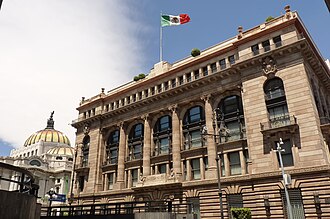
Despite the slowdown in inflation, analysts at Barclays, Bank of America Securities (BofA), and Goldman Sachs believe that the Bank of Mexico will maintain its monetary policy stance without making any changes.
Barclays and BofA anticipate that the Governing Board will keep the interest rate unchanged at 6.50%, a decision that is expected to be made unanimously. Barclays also expects the central bank to maintain its monetary policy guidance, considering it appropriate to keep the benchmark rate at that level.
Alberto Ramos, an economist for Latin America at Goldman Sachs, has pointed out that neither core inflation nor services inflation has been low enough for the central bank to consider making additional rate cuts.
Current core inflation has risen by 4.19%, continuing on a trajectory toward 4.5%, while inflation for services has reached 4.57%, one of the highest rates.
The Goldman Sachs expert noted that “This is even more relevant when considering recent indicators of greater strength in domestic economic activity, the Federal Open Market Committee’s shift toward a more restrictive stance, and the narrow interest rate spread between Mexico and the United States.”
Carlos Capistrán, chief economist for Mexico and Latin America at Bank of America, has emphasized that the scenario calls for three additional increases to the Federal Reserve’s current benchmark rate, a factor that aligns with the caution analysts have shown and attribute to Banxico’s Governing Board.
Persistent inflation and the widening interest rate differential with the United States limit the Bank of Mexico’s room to maneuver in cutting rates.
Mexico competes for capital, and emerging markets typically offer attractive spreads; if any of these spreads narrows, foreign investors reduce their bond holdings.
If it is confirmed that the United States will implement a rate hike, a new interest rate differential would emerge.
Even so, members of the Governing Board must have already realized that this interest rate differential would be much more significant in their monetary policy decisions.
The next monetary policy decision will be the fifth of eight already scheduled, and if the forecast proves accurate, it will be the second consecutive decision in which the rate remains unchanged.